𐰆𐰣:𐰸
On Ok
Meaning:
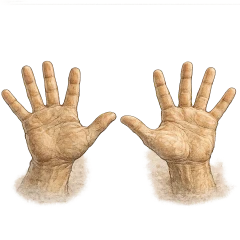
On Ok (the Ten Arrows), a Western Turkic tribal confederation
Chinese histories describe this confederation as two groups of five tribes, the Dulu and Nuşibi. Its established tenfold organization is often associated with a political reorganization in the 630s, whereas other accounts trace its origins further back.
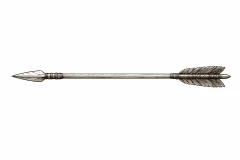
The conventional interpretation connects ok with “arrow”, referring to arrows reportedly granted to tribal chiefs as emblems of authority. A competing analysis connects the second element with uk ~ ok “clan, lineage”.
Word family
In modern languages (1 / 22)
Select a region to see the cognate.
| Language | Cognate |
|---|---|
| Turkmen | The cognate has disappeared from this language. |
| Turkish (Azerbaijan) | The cognate has disappeared from this language. |
| Turkish (Türkiye) | The cognate has disappeared from this language. |
| Salar | The cognate has disappeared from this language. |
| Gagauz | The cognate has disappeared from this language. |
| Crimean | The cognate has disappeared from this language. |
| Uyghur | The cognate has disappeared from this language. |
| Uzbek | The cognate has disappeared from this language. |
| Kazakh | The cognate has disappeared from this language. |
| Nogai | The cognate has disappeared from this language. |
| Siberian Tatar | The cognate has disappeared from this language. |
| Kyrgyz | Onok |
| Altai | The cognate has disappeared from this language. |
| Alan | The cognate has disappeared from this language. |
| Kumyk | The cognate has disappeared from this language. |
| Tatar | The cognate has disappeared from this language. |
| Bashkir | The cognate has disappeared from this language. |
| Tıva | The cognate has disappeared from this language. |
| Khakas | The cognate has disappeared from this language. |
| Sakha (Yakut, Dolgan) | The cognate has disappeared from this language. |
| Khalaj | The cognate has disappeared from this language. |
| Chuvash | The cognate has disappeared from this language. |
Examples
Translations
German:
On Ok (Zehn Pfeile), westtürkischer Stammesbund
Russian:
Он-Ок («Десять стрел»), западнотюркский союз племён
Turkish (Azerbaijan):
On ox (On Ok), Qərbi türk tayfa birliyi
Turkish (Türkiye):
On Oklar; Batı Türklerinin on boylu birliği
Bibliography 6
-
Peter B. Golden (2012) Oq and Oğur ~ Oğuzsection “On Oq”The name On Oq, usually translated as “the Ten Arrows,” denoted in Old Turkic the collective name
-
Mihály Dobrovits (2004) The Ten Tribes of the Western Turksarticle abstractThe western Turks had ten tribes. These ten tribes, called the Ten Arrows (on oq) were not their original tribal system.
-
Oljobay Karataev (2003) Кыргыз этнонимдер сөздүгүpp. 149–150, s.v. “Онок”pp. 149–150, s.v. “Онок”Онок - кушчу уруусунун курамындагы уруктардын бири (Төрөкан уулу, 1995, 14).
-
Sergei Starostin, Anna Dybo, Oleg Mudrak (2003) Etymological Dictionary of the Altaic Languagesvol. II, p. 1491, s.v. “*úkʿu” (Proto-Turkic *uk)vol. II, p. 1491, s.v. “*úkʿu” (Proto-Turkic *uk)
*úkʿu (~ -k-) kin, clan: Tung. *uK-; Mong. *(h)ug; Turk. *uk; Jpn. *úkárà. PTung. *uK- 1 unity, accord 2 kin; successors (1 единство, согласие 2 род; потомство): Man. uxe 1, uqsun 2. ◊ ТМС 2, 254, 257. The root is attested only in Manchu; uqsun may be < Mong. (although suffixation is different), but uxe is no doubt genuine. PMong. *(h)ug origin, kin (происхождение, род): WMong. uγ; Kh. ug; Bur. ug. PTurk. *uk kin, tribe (род, племя): OTurk. uq ~ oq ‘kin, tribe’; Karakh. uq ~ oq (MK) ‘share of inheritance’; Kaz. ŭq (dial.); Oyr. uq; Tv. uq; Chuv. jъₙχ. ◊ VEWT 511, ЭСТЯ 1, 582-583, Егоров 76. The OT words are sometimes erroneously united with *ok ‘arrow’ (thus in EDT 76). PJpn. *úkárà clan, family (род, семья): OJpn. ukara (ugara); MJpn. úkárà. ◊ JLTT 560. Analysis as compound *umi-kara is hardly possible (because of voiceless -k-). ‖ Дыбо 15. -
Talat Tekin (1994) Tunyukuk Yazıtıp. 64, glossary, s.v. “On-Ok”; Tunyukuk lines 19, 30, 33, 42–43p. 64, glossary, s.v. “On-Ok”; Tunyukuk lines 19, 30, 33, 42–43
On-Ok etnik ad (Batı Türkleri, Türgişler). o. bägläri bodunı 42; o. bodunı 30; o. kaganı 19; o. süsi 33; o. süsin 43. -
Gerard Clauson (1972) An etimological dictionary of pre-thirteenth-century Turkishp. 76a–b, s.v. “1 ok”p. 76a–b, s.v. “1 ok”
1 ok ‘arrow’. Owing to the use of arrows for various ritual and ceremonial purposes it came to be used at a very early date in the sense of ‘sub-tribe’ (and as such forms part of such tribal names as On ok) and also of ‘a lot’ in casting lots. O:k (so spelt) ‘a share of an inheritance’, noted in Kaş. is, no doubt, another special sense of this word. Later it came, like i:k, to mean ‘a long piece of wood’, usually round in section, like an axle, rolling-pin, and the like, and so tended to be confused with u:ğ. S.i.a.m.l. See Doerfer II 605-6. Türkü viii oku:n urti: ‘he hit with an arrow’ I E 33, 36; On ok the tribal name of the Western Türkü occurs several times in I, II, T: Uyğ. viii ff. Man.-A ok ya altı ‘took bows and arrows’ Man.-uig. Frag. 401, 7: Bud. (I will cause excruciating pain to that demon) vacırlığ okın tuşğuru tokip ‘smiting him and causing him to meet a vajra-like arrow’ U II 26, 14; okın ursukmış kişi teg ‘like a man struck by an arrow’ Suv. 623, 17; a.o. do. 621, 8-9; o.o. TT IV 10, 12; U II 78, 31: Civ. TT I 162 (at-): Xak. xi ok al-sahm ‘arrow’; ok jā’izatu’l-bayt ‘the cross-beam of a house’; hence one says ev oki: sahmu l-bayt ‘the main beam (lit. arrow) of a house’; ok yıla:n ‘the adder (al-af'd) which throws itself at a man’ (also III 29, 27); ok al-qur'atu’llati yuqsam bihd'l-ard iva’l-ansibd’ ‘the lots which are used in dividing up land and shares (of anything)’ Kaş. I 37; o:k al-nasib mina'I- -mirdt ‘a share of an inheritance’; apa:r bi:r o:k tegdi: ‘one share of the inheritance came to him’ / 48; about 60 o.o.: KB bodum erdi ok teg ‘my body was as (straight as)"an arrow’ 371, 1099; bolur ok yaçı ‘he becomes an archer’ 4046: xiii(?) At. büter ok başı ‘an arrow wound heals’ 140; ya okun 228: Tef. ok ‘arrow; share, portion’ 235: xiv Muh.(?) al-nuşşdb ‘arrows’ o:k (‘with o-’) Rif. 76 173 (only): Çağ. xv ff. ok (1) tir ‘arrow’ (quotn.); (2) metaph. çübhâ-yi dirdz hi bdld-yi imdrat- -rd ba-dün püşand ‘the long beams which cover the roof of a building on the outside’ {quotn.; the refce. to u:ğ follows): Xwar. xm ok ‘arrow’ 'Ali 15: xiii(?) (they fought) ok birle ‘with arrows’ (swords and spears) Oğ. 160; a.o.o.; xiv ok ‘arrow’ Qutb 117; MN 91, etc.: Kom. xiv ox ‘arrow’ CCG; Gr.: Kip. al-nuşşdb ok Hou. 13, 16: xiv o:k ditto Id. 17: xv ditto ok Kav. 64, 1; Tuh. 36b. 5: Osm. xiv ff. ox ‘arrow’ in several texts down to xvi TTS I 536; II 720; HI 536; xiv ok bırak- ‘to cast lots’ I 537.